Built to live on a boat.
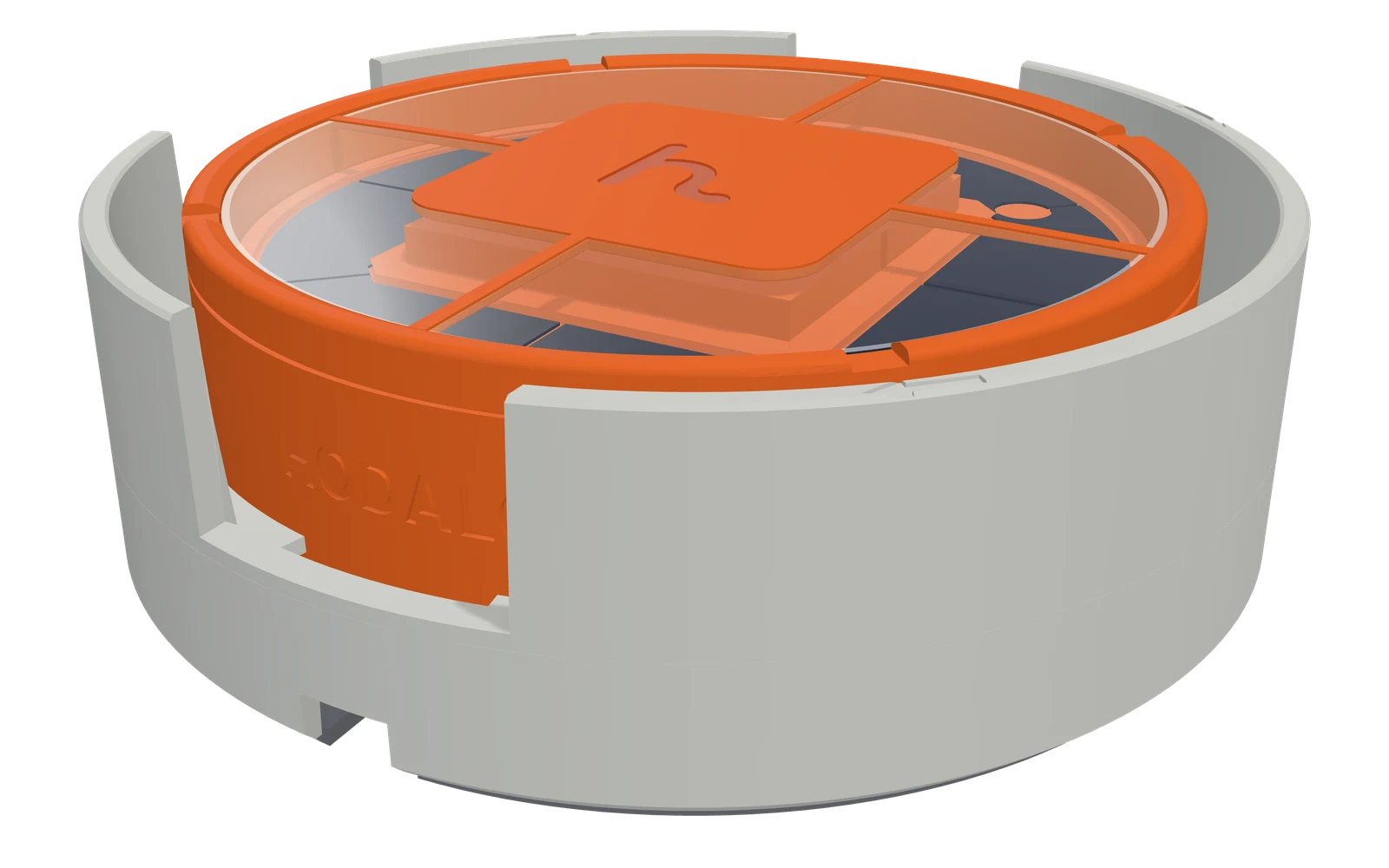
One piece, welded shut at the factory. Nothing to open, nothing to plug in and nothing to service inside.
-
A raised rim.
The rim stands just above the clear top, so flat and straight objects land on the rim and not on the clear top.1
-
A clear, coated top.
Clear polycarbonate over the solar ring and the antenna, with a UV-blocking hard coat and a water-shedding top coat.
-
Made for the weather.
The body, rim and cradle are an outdoor-grade plastic, chosen for sun, salt, heat and cold.
-
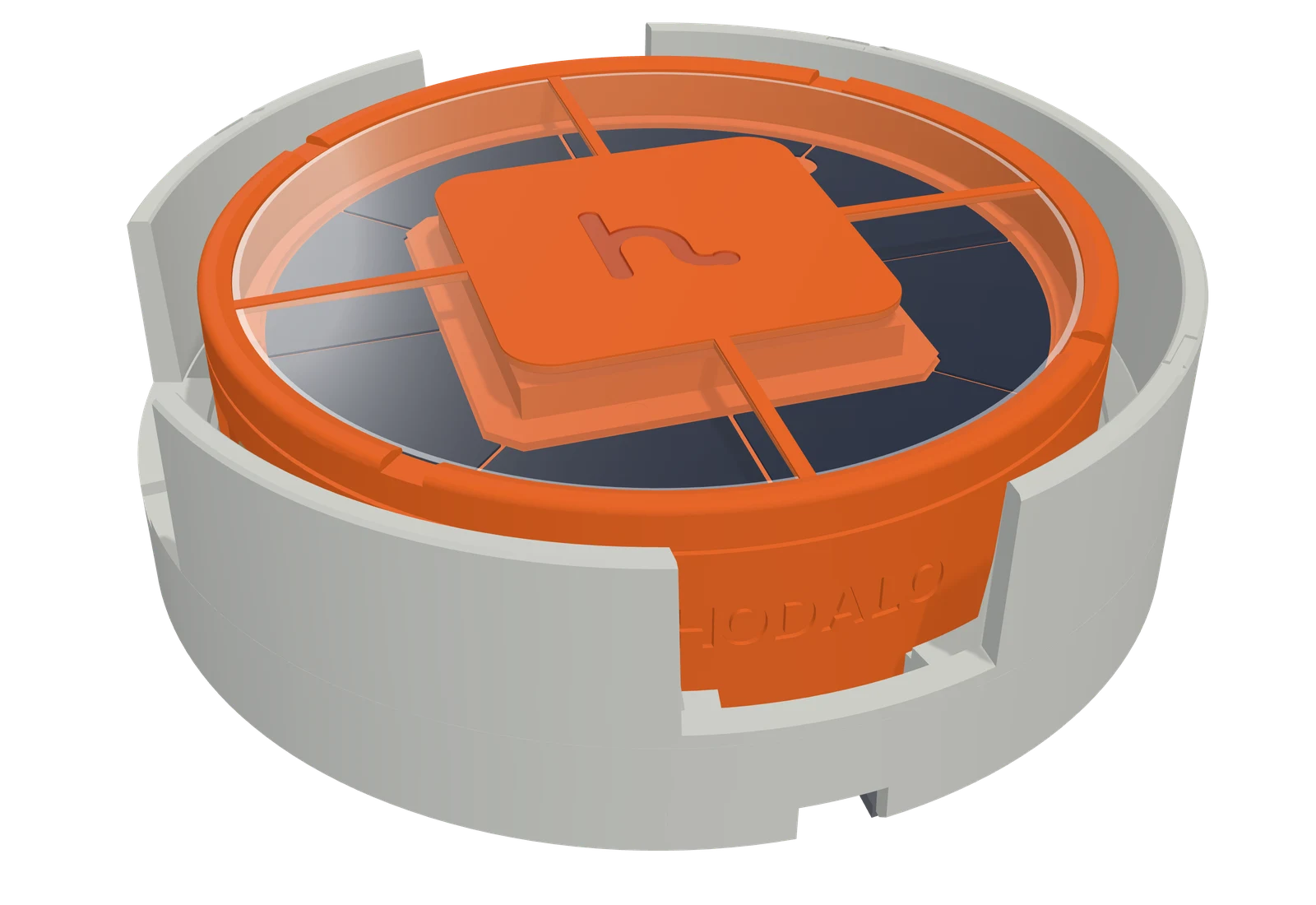
Held by its cradle.
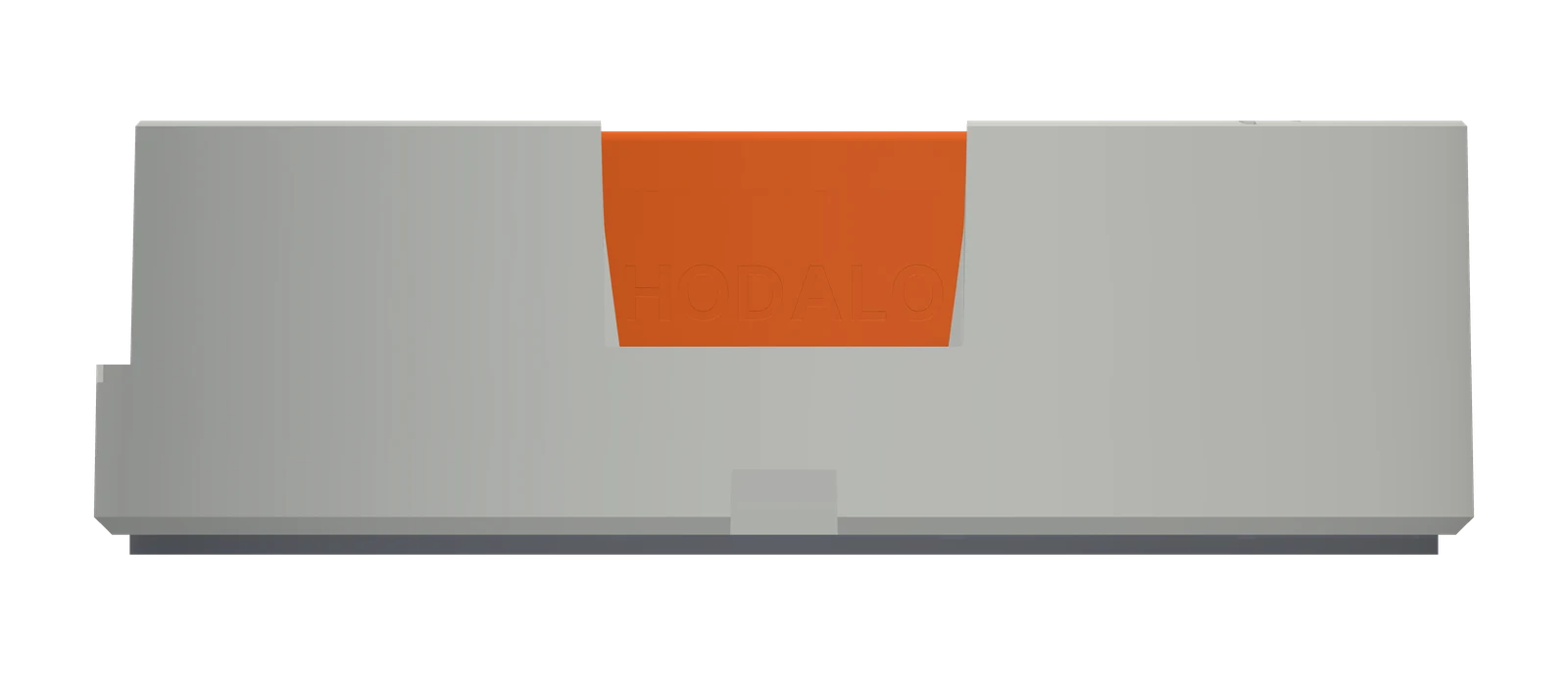
The tag locks into a cradle fixed to the deck. The cradle wall stands around the tag’s side, with slots for fingers. If the tag does come off the boat, it does not float.
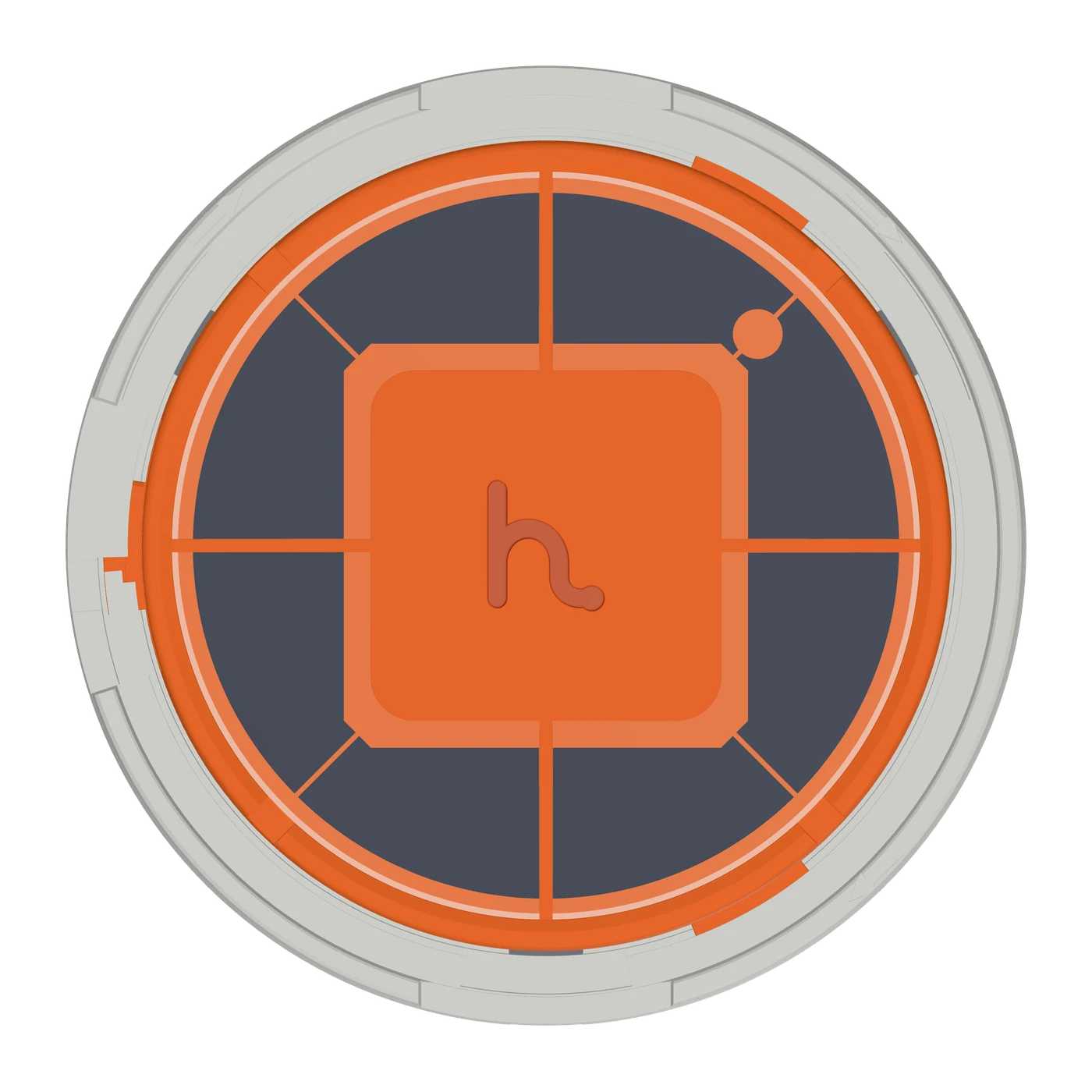
65 mm across. Low on the deck.
What’s inside.
Sealed for good, so here it is taken apart. Pick a number.
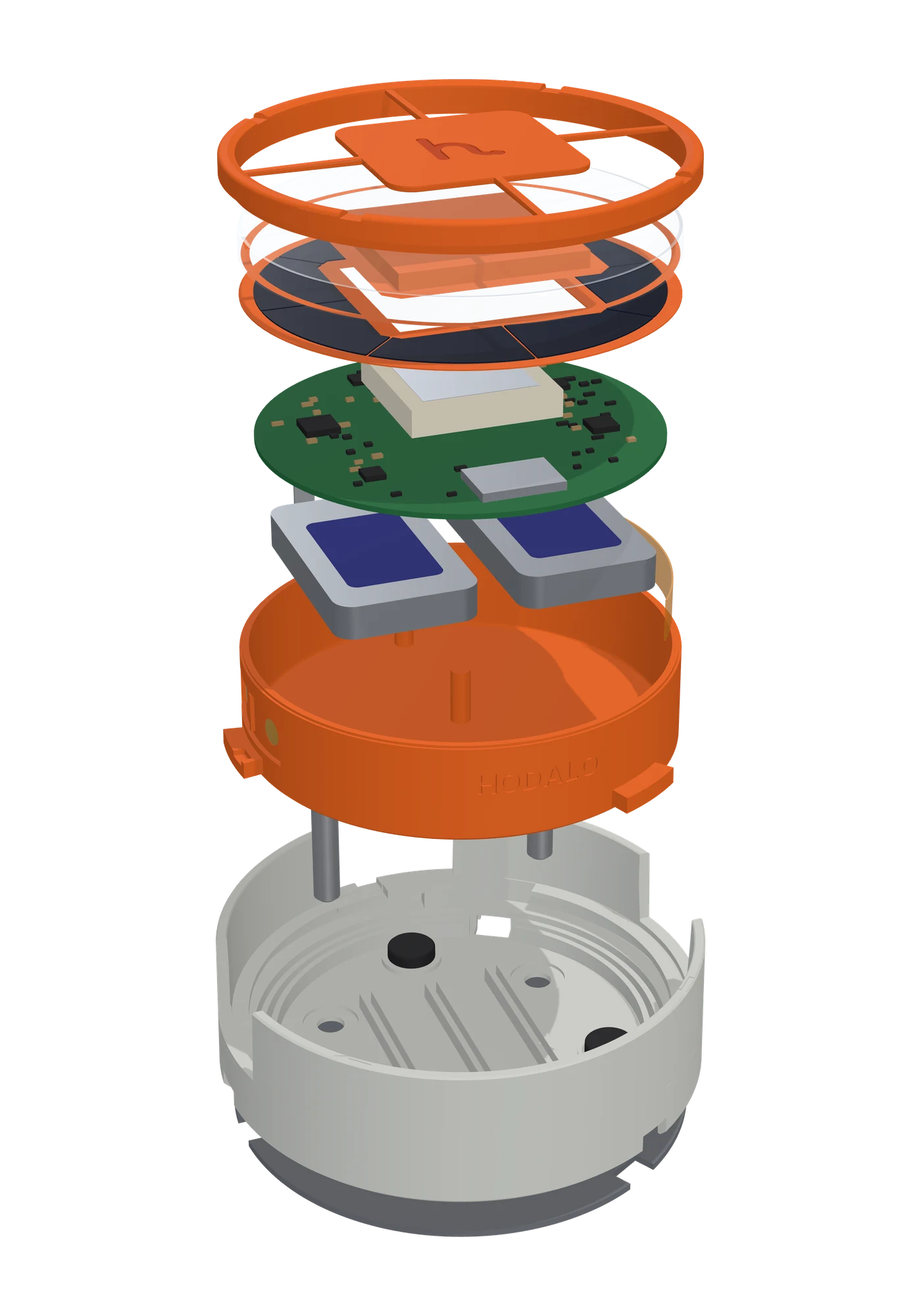
Inside shown simplified. Open the 3D model
-
The raised edge around the top. It stands just above the clear top, and four thin spokes join it to the square centre.1
-
Clear polycarbonate over the solar ring and the antenna.
-
A ring of solar cells, 13 cm² in all, charges the battery.1
-
Sits under the clear top. It needs open sky.
-
Satellite radio, mobile radio, positioning, and a motion sensor that reads tilt and the start of movement.
-
Two rechargeable lithium-ion cells. Sealed in, not replaceable.
-
For LTE-M, wherever the tag has signal.4
-
Two contacts on the side of the tag tell when it is wet or under water.1
-
Welded shut at the factory. No seams to open.
-
77 mm across and bonded to the deck. The tag twists into three lugs and a latch clicks shut. The wall has slots for fingers.
Know where every boat is.
If you run a resort, a camp or a rental dock, tell us about your site and your fleet, and we will tell you plainly whether Hodalo fits.
A short call, no slides. Or write to hello@hodalo.com.
Where we are
This is a plan, not a promise.
- Now Design on paper. No tag has been tested yet.
- Next Satellite link test from a real tag.
- Then Pilot season with a small number of sites, 10 tags per site.
- 2028 First paid deployments (target).